Now that my entire book has been written in just action and dialogue, it’s time to go in and layer in thoughts. What is the character thinking and how is it going to drive the scene?
Now that my entire book has been written in just action and dialogue, it’s time to go in and layer in thoughts. What is the character thinking and how is it going to drive the scene?

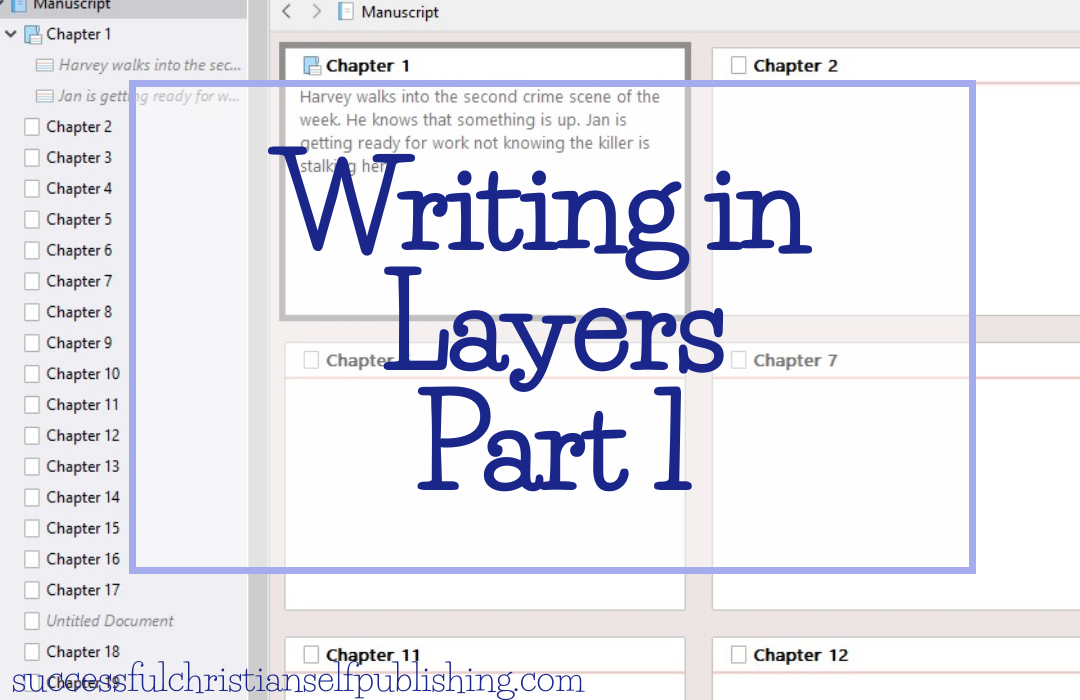
Once I have my characters developed and my book plotted out all the way to the end, I go to the beginning again: Chapter 1, Scene 1. Now, I write action and dialogue.
I go into writing a book already knowing my characters, much like my artist friend has gone into painting this painting know what her subject is. So, I’ve already done my character research, I already know everything about them, and I already have my faith, romance, and, if necessary, suspense arcs of the project. See my post on Brainstorming Character Conflicts.
Once that is finished, it’s time do the plotting of the story. Basically, I think, “What happens in chapter 1?” Then I give a paragraph or two or three of the events that are going to unfold in chapter 1.
If the question had been, “Why do you tend to write characters in desperate circumstances?” I could have answered that question without the soul-searching. But this question was, “Why is it important to you to write characters in desperate circumstances.
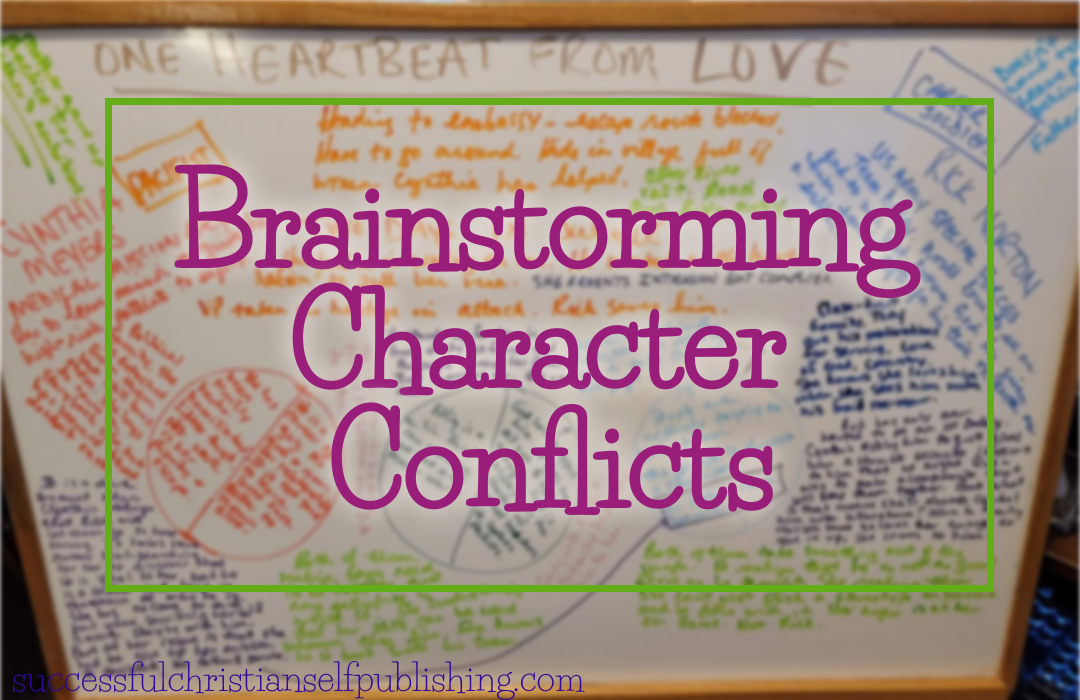
I write Christian romantic suspense, so inside that genre, I need to have a faith arc, a romantic arc, and a suspense arc. Each of those arcs require internal and external conflicts, motivations, and different characterizations.
When I’m setting up and getting ready to plot a book, the first thing (other than my characters) that I need to know are what those conflicts and motivations are, and how they’re going to be resolved/utilized.
The term “street team” originated with musicians. Fans in the area of an upcoming venue would receive posters and such to hang up around town and let people know the band was coming.
I recently judged an unpublished novel contest. I had an array of genres, but one thing that stood out consistently throughout all of them was a lack of realistic dialogue.
There is a way to come out of that isolation and find yourself among people who think like you, who talk to non-existent people in their heads, who also spend hours a day/week/month pounding at a keyboard, praying fervently that the words they type will mean something to the readers who consume them.
Attend a writers event.

Why do you need reviews? The obvious answer is to garner or increase your symbolic capital. A COMMON mistake many authors make is when they request that someone give their book a review is they either ask the reader to search for the book or even send the person a link to their book, making the person click around till they finally get to the review page where they can write the review.Because of this, readers are more than likely not to follow through. More than three clicks and they move on.

Writing can be a physically demanding job. We sit in a chair for hours at a time and hold our hands in a certain position on a keyboard, then type, type, type. It’s bad for our backs. It’s bad for our hands. It’s bad for our necks.